Wednesday, January 29, 2014

The "Inner-Ring" of Paul Kagame


This is a paper I wrote for a War and Theology Class


Introduction:
            C.S. Lewis describes an “Inner Ring” as something that is “morally neutral” and “unavoidable” in its existence. The overwhelming desire to be part of an Inner Ring that leads people to neglect former friends or derive pleasure from the humiliation of outsiders is what causes Inner Rings to become dangerous and evil.[1] Paul Kagame, the current president of the African nation of Rwanda, has built his presidency around an Inner Ring attempting to bring himself to messiah-like status to the people of his nation out of both fear and cult-like respect.
Demographics and A Brief History:           
In order to understand Paul Kagame’s Inner Ring, one must understand the demographics and a brief history of Rwanda. Rwanda is comprised of three tribes: Hutus (85% of the population), Tutsis (14%), and Twa [also called Pygmy] (1%), with the main tribal conflicts being between the Hutus and the Tutsis.[2] Colonial rule by the Germans and the Belgians held to the pre-colonial custom that the Tutsis were the superior ruling tribe. The colonial powers used the Tutsis as their “in-country” ruling power.[3] Between 1959-1961 there was a revolution that overthrew both Belgian (which had replaced Germany after world War I) authority and Tutsi sub-authority and established Hutus as the ruling elite.[4] During this time, many Tutsis (including Kagame, age 2) went into exile into neighboring nations (in Kagame’s case, with his family, in Uganda).[5] The political climate and the ruling Hutus, including subsequent President Juvenal Habyarimana (president from 1973-1994) would not allow the exiled Tutsis to return to Rwanda.[6] A group of Tutsis, including Kagame, formed a militia (the Rwandan Patriotic Front – RPF) and launched a civil war that would last four years culminating in the Rwandan genocide in 1994 (mainly killing Tutsis[7]) and their eventual takeover of the government of the nation.[8]
The Inner Ring Begins:           
C.S. Lewis states, “Unless you take measures to prevent it, this desire [to be part of an Inner Ring] is going to be one of the chief motives of your life…”[9] It is my assertion that Kagame made this determination very early in his military and political career and quite possibly early in his life [to form and be part of an inner ring]. While no one can be sure, he may have desired so desperately to be an “insider” because he was an “outsider” for so long as a refugee.  First, Kagame was a commander in the RPF military. When Kagame came to power in the Rwandan government, he was first the Vice-President. As Vice-President, however, he was actually leading the government and military from that position. To begin to create his Inner Ring by showing his strength and positioning his allies, under the guise of eliminating the enemy soldiers and genocidaires (those who committed the genocide of 1994) who had fled to the Democratic Republic of the Congo (DRC – Then called Zaire), Kagame ordered a secret full invasion of Zaire with the RPF army fighting along side the militia of Laurent Kabila in 1996.[10] The goal was to depose then Zairian President Mobutu and replace him with Kabila, thought to be an “insider” with Kagame.[11] The Kagame-Kabila alliance destroyed thousands of innocent human shields used by Mobutu’s army whom they were fighting.[12] Kagame repatriated “two and a half million [Rwandan] refugees [hiding from the RPF] in broad daylight.”[13] Together, Kagame and Kabila fought until May 17, 1997 when Kabila was officially part of Kagame’s Inner Ring as president of neighboring Zaire (which Kabila renamed the Democratic Republic of the Congo).[14]
As reported by the United Nations, having Kabila as part of his Inner Ring meant that Kagame had access to large amounts of gold, diamonds, and coltan (a vital component in cell phones) – minerals found in large quantities in the DRC.[15] Kabila also appointed Rwandan Colonel James Kabarebe, a staunch Kagame ally, to General and Chief of Staff of the DRC,[16] no doubt under the influence of Kagame’s power of building an Inner Ring.
Kabila overstepped his boundaries with Kagame and was quickly removed from Kagame’s Inner Ring when he began listening to the Congolese people about the disproportionate Rwandan influence in the Congolese government. In 1998, Kabila fired Kabarebe and removed all Rwandan troops from the army of the DRC.[17] These actions by Kabila and an incursion by attackers from the DRC into a Rwandan city prompted another invasion by Rwanda into the DRC in 1998. Aside from attacking military targets, there is much evidence that the RPF also attacked civilians.[18] Under mysterious circumstances, President Laurent Kabila was assassinated on January 16, 2001 and succeeded by his son, Joseph Kabila.[19] One has to beg the question if C.S. Lewis’ question applies here: “…[Have] you ever derived actual pleasure from the loneliness and humiliation of the outsiders after you yourself were in…?”[20] Did Kagame gain pleasure from his newfound power and ability to make Kabila an “insider” and then an “outsider?” One can speculate that the answer points to the affirmative based upon his actions in subsequent years.
Creating and Maintaining an Inner Ring:
            Lewis says that the desire to create Inner Rings is one of the great permanent mainsprings in human action and that unless measures are taken to prevent it, the desire will always be one of the chief motives of life.[21] As he transitioned from Vice-President into President, Kagame used many calculated moves to form an Inner Ring to gain and maintain power.
            After gaining power, the RPF (read Kagame) decided that they could not allow politics to unfold in a conventional manner for fear of another genocide. While many individuals and nations supported this idea for the first few years of RPF control, many have come to believe that this ban on “genocide ideology” is a manufactured effort to repress all political rivals to the RPF.[22] The first official leader of the RPF, a Hutu, President Bizimungu, resigned in protest in 2000 making Kagame the official President, thus centralizing his power to an official capacity. Several Hutus in the RPF government followed Bizimungu’s lead and resigned their positions showing that they were merely in office to show a false attempt at multi-ethnic governing.[23] An official presidential election was scheduled for 2003, and Bizimungu decided to run against Kagame. Being an authoritarian leader, Kagame had Bizimungu arrested under trumped up charges of “corruption” and “divisionism.” He was sentenced to fifteen years in prison. Kagame won the election with 95% of the vote against a rival candidate who received little press attention due to RPF authority.[24]
            Kagame began his presidency from the start by running an authoritarian regime and creating an Inner Ring. He appointed Tito Rutaremara as “ombudsman” to search through personal records of all government officials for suspicious increases of wealth. Anyone caught with any indication of corruption is thrown into disgrace without the chance for rehabilitation.[25] At first glance, strict oversight may seem honorable, but what is not immediately seen is that Kagame is the arbitrary judge of the definition of “corruption.” For example, claiming governmental excess spending Kagame ordered police to stop and impound luxury cars from hundreds of government officials,[26] but this same “anti-corruption” Kagame stayed at a $16,000-a-night luxury hotel in New York City during a meeting at the United Nations.[27]  
            Kagame also uses those outside of the government to form his Inner Ring. Rwandan Anglican Bishop John Rucyahana is an outspoken supporter of Kagame, and Kagame has welcomed him into his Inner Ring. Bishop Rucyhahana’s role is to give Christian blessing to Kagame’s person and regime.[28] While Kagame is not overtly Christian (or identifiable with any religion), Bishop Rucyhahana insists that, “he’s a divine prescription from God to this nation [Rwanda].”[29] He continues that this apparently non-religious president should not be called “non-religious” because “he may even be more religious than some so-called religious people. It all depends on what you call religion…”[30] Kagame has capitalized upon Bishop Rucyahana being in his Inner Ring to blur the line between church and state, thus even further centralizing his own power.
            Mainly, Kagame maintains his Inner Ring of loyalty by fear and guilt. Those who are in the Inner Ring may profess that they are loyal out of Kagame’s accomplishments, but many will argue that the facts on the ground are just too blatant and prove otherwise.  As already stated above, Kagame fires and throws anyone into disgrace who is caught in corruption. This causes others in government under Kagame’s authority to obey him out of fear. Kagame is also known for disappearances, arrests, and murders of rivals. Seth Sendashonga, an anti-Kagame figure exiled in Kenya was shot and wounded. A former RPF exile, Theoneste Lizinde who had joined Sendashonga in Kenya was assassinated.[31] Using guilt, Kagame also maintains his Inner Ring by use of the “genocide credit.”[32] The “genocide credit” is a “slang”[33] term of Kagame’s Inner Ring. The premise of the “genocide credit” is to guilt outsiders by telling them that they (or their nation) did nothing to help Rwanda during the genocide, or that they are adding pressure that could cause another genocide, and now they have no authority with which to speak (mainly against Kagame and/or the RPF). Victore Ingabire, a native Rwandan Hutu politician, returned to her homeland to run against Kagame in the most recent presidential election. She was arrested in October 2011 on charges of divisionism, genocide ideology, and inciting revolt. Her “crime” was that she gave a speech at the Rwandan National Genocide Memorial and said that the Hutus killed in the genocide are forgotten, and their families should be given recognition, and that there is a need for national reconciliation and justice for the Tutsis who were murdered.[34] On a personal level, I, myself have received e-mails and messages via Twitter accusing me of genocide ideology from both Rwandan citizens and Government officials including Minister of Defense James Kabarebe (mentioned above) because of activism[35] related to the recent accusations[36] by the United Nations that Rwanda was sponsoring and maintaining a militia that was destabilizing and murdering civilians in the DRC.
A Prime Example of Leaving the Inner Ring:
            Dr. Theogene Rudasingwa grew up a Tutsi refugee much the same way that President Kagame did, and when he learned about the formation of the RPF, he joined so that he could be part of the “liberation” of a homeland he did not remember.[37] Rudasingwa met Kagame while the RPF was regrouping from a military defeat in the Rwandan mountains. There, Kagame ordered him to accompany a businessman to “take advantage of contacts” in Belgium.[38] This was the beginning of Rudasingwa’s political career in the RPF and being in Kagame’s Inner Ring.  Upon his return from Belgium, Kagame appointed Rudasingwa as an RPF diplomat though the RPF had not yet taken full control of Rwanda.[39] He would go on to serve in several diplomatic appointments. In 2000, Rudasingwa was appointed as Director of Cabinet to President Kagame; the most senior civil servant position in Rwanda.[40] While at first Rudasingwa prized this office, he later came under much pressure from Kagame who would micro-manage every aspect of his position (and most government positions). In essence, Kagame was (and still is) keeping his government a “we-government”[41] that keeps those that would add any diversity or be outside of Kagame’s control out of the government. The pressure on Rudasingwa became so great that he finally realized that he had to get out of the Inner Ring. After much difficulty, on April 21, 2005, Rudasingwa and his family left Rwanda for the United States as political refugees.[42] After returning to his Christian faith, he realized that the power he had in the Kagame regime was not the life he was meant to live, and though he struggled at first with faith, he found a church home that spoke to his struggling mind and heart and rekindled his faith.[43]
Conclusion:
            President Paul Kagame of Rwanda and his RPF regime came into power through a revolution that culminated in a horrific genocide.  Kagame grabbed power and maintains it to this day by creating an Inner Ring of loyal government officials and supporters in the population. Whether or not this support is genuine is largely unknown because Kagame is known for ruling with fear and guilt. His opponents are often arrested, disappear, or murdered, and he and his supporters use the “genocide credit” to guilt or pull their authority over others by saying that they have a moral authority because of the genocide of 1994.  All of the tactics that Kagame has used and continues to use show that he has chosen the path of becoming a “scoundrel”[44] and a despotic authoritarian ruler bent on maintaining his rule at the expense of human life and dignity as he has shown in the cases cited here and in many more instances that are not in line with the subject of this paper.


[1] C.S. Lewis, “The Inner Ring,” accessed from http://www.mit.edu/~hooman/ideas/the_inner_ring.htm  on November 25, 2013.
[2] Theogene Rudasingwa, Healing a Nation: A Testimony (North Charleston: CreateSpace Independent Publishing Platform, 2013), 68.
[3] Ibid., 70-71.
[4] Ibid., 73.
[5] Stephen Kinzer, A Thousand Hills (Hoboken: John Wiley & Sons, Inc., 2008), 12.
[6] Ibid., 38.
[7] Facts about the Rwandan Genocide are controversial and questions remain as to who started the killing, who did the killing, and so forth. It is a fact that Tutsis were the main victims. Any more is a very contentious debate and beyond the scope of this paper.
[8] Rudasingwa, 75.
[9] Lewis
[10] Kinzer, 201.
[11] Ibid.
[12] Ibid., 202
[13] Kagame quoted in Kinzer, 204.
[14] Ibid., 205.
[15] Ibid., 212.
[16] Ibid. 206.
[17] Ibid., 206-210.
[18] Ibid. 210.
[19] Ibid., 218.
[20] Lewis.
[21] Ibid.
[22] Kinzer, 223.
[23] Ibid., 224.
[24] Ibid., 225-229.
[25] Ibid. 235-236.
[26] Ibid., 237.
[27] Ann Garrison, “Rwandan President on the Night of Troy Davis’ Execution” accessed from http://sfbayview.com/2011/rwandan-president-paul-kagame-on-the-night-of-troy-davis’-execution/ on November 25, 2013.
[28] Kinzer, 302-306.
[29] Ibid., 306.
[30] Ibid., 307.
[31] Ibid., 214.
[32] Ibid., 336.
[33] Lewis.
[34] “Victore Ingabire’s Trial” accessed from http://www.victoire-ingabire.com/Eng/victoire-ingabires-trial/ on November 25, 2013.
[35] My own activism includes letters to government officials, being on the founding board of directors of a Refugee Mission, blog postings that are followed by the RPF and Human Rights agencies, and, to date, 3 published articles concerning Kagame’s crimes in the DRC.
[36] Steve Hege, et al., “Letter from the Group of Experts on the Democratic Republic of the Congo pursuant to Resolution 1533,” accessed from http://www.un.org/ga/search/view_doc.asp?symbol=S/2012/843
[37] Rudasingwa, 2-60.
[38] Ibid., 101.
[39] Ibid., 109. One can compare this arrangement to Palestinian diplomats before Palestine had any official recognition of statehood.
[40] Ibid., 238.
[41] Lewis. “We” is a term used by people on the inside of an Inner Ring.
[42] Rudasingwa, 319.
[43] Ibid., 324.
[44] Lewis. “Scoundrel” is a term used by Lewis to describe a choice that will come to 9 out of 10 people in their lifetimes. They will have a choice to become a “scoundrel” or to choose to do what is right, but the choice in the moment may not seem very dramatic.

Sunday, January 19, 2014

To Be A Dog

After the "mysterious" brutal murder of defected former Rwandan Spy Chief Patrick Karegeya, many questioned the Government of Rwanda's role in his murder.

Rwandan Minister of Defense James Kabarebe, without confirming nor denying the Government's role in this murder only replied that if "you choose to live like a dog, you die like a dog."

Apparently to Gen. Kabarebe, being a dog is a bad thing. This statement got me thinking about my life with dogs. I've had at least one dog at a time, sometimes more, since I was a small child. I became sentimental

[Any references you can make in what follows to any matters pertaining to Rwanda, the Government of Rwanda, President Kagame, General Kabarebe, or any other person or situation related to Rwanda is PURELY COINCIDENTAL!]

I could talk about all of my dogs, but I'll just speak of one dog - Maggie.  Maggie was the first dog I had that was purely mine.  Now, because of circumstances that were beyond my control, Maggie lives a with my parents in her old age. I miss her.

My Dog - Maggie
Maggie taught me about honesty. Dogs are honest in general. I learned this from Maggie! Maggie didn't lie. If Maggie wanted to play, she let me know. If Maggie wanted to sleep, she slept. If Maggie was scared of the thunder, she hid.  Maggie, like all dogs, doesn't lie. Maggie even told the truth to me. If I didn't pay enough attention to her, she would let me know in her own ways. She would follow me around the house to the point of annoyance. If I still didn't pay enough attention to her, she would force me to pay attention by pooping on the floor. And yes, she was well trained! It was telling the truth that I, her master, had not lived up to my end of the bargain.  Dogs don't lie!

I also learned that no matter what, there is no way to quiet dogs. If dogs have something to say, they WILL be heard. Maggie loved to spend time outside. Ok, she has her quirks - she is a lab - a water dog, but she was scared of rain...don't ask.  But, when it was nice out, Maggie liked to be outside. Whenever Maggie felt she needed to be heard, she would bark. Her bark would be passed around the city neighborhood by all the other dogs that were outside. Even if Maggie stopped barking, "THE BARK" could not be silenced! Dogs can't be silenced.  I would bring Maggie inside if she barked too much, but the other dogs in the neighborhood would continue barking. Even if you eliminate one dog from the mix, the dogs will still keep barking!

Dogs defend what is right! Maggie knew that I loved her, and she would defend me if it came down to it. Whenever I got sick, Maggie could sense it and she would sit by my chair or couch or bed until I felt better. She protected me. I only once saw her show her teeth and growl - it was to defend me against what she thought was a threat. Dogs protect what is right! They protect their pack! If they are betrayed by their human pack, they will protect the new human pack that takes them in!

Wow, it seems that I've learned a lot from Maggie. I wonder if it's really an insult to be called a "dog?"


Tuesday, January 7, 2014

Kagame-You Have Already Lost


President Kagame,

You have already lost. Your RPF regime is illegitimate. You maintain power by fear, deception, and murder. You are the most brutal dictator in the current world. Millions have lost lives by your hands and by your orders. History will judge you as the loser.

Yes, you retain power, but your power is not in the respect of any but your brainwashed loyalists. Are they your fan-base out of fear or are they following you because you are a true visionary?  You and I both know the answer. You deal in fear, death and deception!

History will go on, but you are human – Yes, President Kagame, you ARE a human – your reign will not last forever. You have lost. You will be remembered as Adolph Hitler, Idi Amin, The Apartheid Regime of South Africa, Pol Pot…need I name more?

Because of your “power,” you can start wars, you can murder, you can do almost anything you want. All of that confirms that you have already lost! You do not have the respect of the world, you are a pawn of certain Western powerbrokers of this world. As you said in regards to the death of President Habiyarimana – “I don’t give a damn.” Do you really think your Western powerhouses “give a damn” about you?

How will you be remembered? Saddam Hussein is known as the “Butcher of Bagdhad.” Idi Amin is “The Last King of Scotland.” Adolph Hitler is known as “evil incarnate.” Do you really want this legacy? Apparently you do – you have already lost!

You think you win by murdering opposition such ask Mr. Karegeya. Yes, he was himself an enemy of Rwanda. But if all nations murdered there enemies…well, you know where this is going, and obviously there is no reasoning with you!

You jail your opponents. Victoire Ingabire is serving 15 years in prison because you can’t handle the truth of the Genocide in which you took part. Yes, Mr. Kagame, even you killed innocent civilians! You bragged about it in killing Hutu refugees in a 2010 speech http://wp.me/p1q4zD-byZ .  You jailed her for speaking the truth! You jailed her because she spoke the truth that you’ve already lost!

Your regime has summoned people to public meetings and then summarily executed them. You’ve done this because you’ve been losing for a long time! You’ve murdered political opponents who were no threat to you in your rigged presidential elections. Why? Because you’ve already lost.

Of course your RPF and your RPF Loyalists will look at this and laugh. I expect nothing less. I do, however expect more out of the international community.

Pastor Rick Warren:  I want to know how you can continue to support a leader who has, without question, engaged in these murderous, Ungodly activities! How can you bless his illegitimate rule? You can support the Rwandan people without supporting this murderous regime! Anything less is sheer apostasy. It’s time you make a clear stand!

Politicians of the World: It is time that you withdraw all support of this murderer. There is no secret to his tactics. There is no question as to what he does. Forsake the money for the people you promised to protect and serve.

People of the world: Pressure your governments to stop supporting President Kagame of Rwanda. It is time that a peaceful change is needed. It is time that he faces justice for his crimes.

Mr. Kagame: You can continue to kill people and jail them, but you will never silence the truth – You have already lost!

Tuesday, December 17, 2013

Kangaroos in Rwanda - Kagame, Ingabire, Mandela

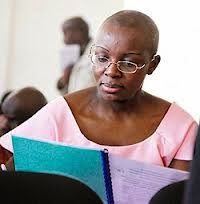
On December 13, 2013, Victoire Ingabire was sentenced by Rwanda's "kangaroo" Supreme Court to 15 years in prison on politically motivated and trumped up charges including "conspiring to form an armed rebel group," "spreading false rumors," and "genocide ideology"[a]  (a catch-all term in Paul Kagame's Rwanda used to jail anyone with the slightest disagreement with his regime). This sentence came as Ingabire, leader of the United Democratic Party, was appealing her previous 8 year sentence.

Victoire Ingabire with head shaved in prison
There is no doubt that this sentence was politically motivated and a revenge attack on a woman who stood for nothing other than democracy in a Rwanda where tyrannical and murderous rule is the norm.

A very simple web search will show even skeptics that Paul Kagame can be quoted standing against democracy and the rule of law.  Though the "official story" is that he stopped the Rwandan Genocide of 1994, the facts on the ground say otherwise. Kagame even prides himself in the fact that he pursued genocidaires into Zaire (now the Democratic Republic of the Congo) and in the process massacred innocent Hutu Refugees [b].

Kagame makes no secret about being a tyrant. World leaders, including Former American President Bill Clinton and Former British Prime Minister Tony Blair, continue to defend Kagame's autocratic rule as a necessary step to retain order.  Kagame has said that his nation is not yet ready for democracy [c].

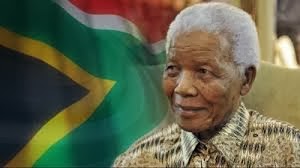
Such quotes are very disturbing considering that Ingabire's pre-determined trial was underway as Kagame was in South Africa "paying his last respects" to Nelson Mandela.  There is no way possible, however, that one could respect Nelson Mandela and continue to rule in the manner that Kagame rules. The mere presence of Kagame in South Africa at any time during the mourning of Mandela was an insult to the memory of possible the greatest freedom fighter the world has ever known.

The late Nelson Mandela
Mandela stood for justice and equality. It is true that his ways were not always peaceful. It is true that he resorted to violence in order to gain attention and victory for the freedom of Blacks in South Africa.  The difference comes when Mandela was freed from jail.  At that moment, Mandela left all hate in his jail cell. Very few people would have denied Mandela the right to be angry with those who persecuted him and jailed him for 27 years. Instead, Mandela did the unthinkable. When elected President of South Africa, Mandela incorporated many of his former enemies into his government. Mandela formed a "Truth and Reconciliation" committee where true justice and true reconciliation between people could happen.

Kagame's mere appearance at the funeral arrangements for Mandela were a mockery of peace and justice. While Kagame touted Mandela's accomplishments, the very opposite were happening in Rwanda to Ingabire.

Paul Kagame
Paul Kagame is showing the world his true colors - the colors of murder, revenge, hatred, violence, and oppression. The world, unfortunately, is not looking. Kagame has pillaged not only his own native Rwanda, but he has also twice invaded the Democratic Republic of the Congo. Had his targets been solely military and related to those who committed the Genocide of 94, many may be able to excuse these invasions, but when the death toll of his invasions reaches the 6 million + mark, the world must ask itself, "why?" Why is Kagame given free-reign over the Great Lakes region of Africa? Why is Kagame so murderous? Why is Kagame afraid of political threats? Why is Kagame afraid of peace?

It is high time that the nations of the world withdraw aid from the Kagame government.  The aid sent to Kagame only support his terroristic causes. There is no "greater good" with Kagame. Unless Kagame repents of his thuggish ways, all aid should be suspended, all diplomatic relations cut off, and Kagame should be treated as he treats his political foes - But this time, it would be warranted - He would be treated as the criminal he is.


[a] http://sfbayview.com/2013/victoire-ingabire-the-woman-who-challenged-rwandas-paul-kagame/
[b] Ibid.
[c] http://www.youtube.com/watch?v=Ubrx3-7Q-DM

Friday, December 6, 2013

Nelson Mandela - A Hero for Our Time


Nelson Mandela, Former President of South Africa, Former "Criminal" (to the Apartheid Regime), Former Activist, Former Leader of the African National Congress in South Africa died yesterday, December 5, 2013 at the age of 95.  Although he has a lot of "formers" in his long resume, Mandela, or "Madiba" as he is affectionately known through his Xhosa clan name or Tata (meaning "Father"- as in "Father of the Nation") will eternally be known as a Hero!

Madiba is not a hero because he was a super-human who did super-human things. He is a hero because he was a human who did human things in a very super way.

The first time I remember hearing about Mandela was very close to his imminent release from prison in 1990. I would have been 12 years old. I remember that day - February 11, 1990 - watching the news coverage (CNN if I remember correctly) all day to see this man released from prison. My 12 year old mind didn't fully understand his importance, but seeing all the celebration, I knew there had to be something special that was happening that day. I remember sitting with anticipation waiting for this man; this man that I wasn't even sure who he was; to be released. For some reason his release was running late, but I watched nonetheless. When I saw him walk through the gates, I felt a sense of happiness that I could not explain. I had no idea of his greatness except through what the news commentators had been saying up to that point. I heard him speak of a new South Africa.

That was the day that Mandela came onto the radar screen of a young American boy and left an impression that would never leave.  From that day forward, he would be a hero to me.

Mandela stood against injustice and oppression. That is not news to anyone who knows anything about him. This cannot be overstated! Perhaps the greatest oppression he conquered was hate. Mandela had every reason to hate his oppressors that February day that he was released from prison. Instead, he decided to leave his hate and anger behind so that his whole life would not be in a mental prison. He made peace with those who oppressed his people and him. He mastered the art of making peace without making concessions to evil. Mandela did not settle for what would be a "good step," but rather he held out for what was right. In the process, however, he refused to let hate be his motivator no matter what his opponents used as their motivator.

When Mandela was President of South Africa - the first Black President that nation has ever seen, he included members of the former Apartheid Regime in his government. He could have, and some say he should have criminalized them as they did to him. Revenge was not on his mind. Instead, the best interest of South Africa was his goal.

Mandela was not power hungry. While he most likely could have built a cult of personality and held onto power - either officially or unofficially - he quietly stepped down as president without incident.

I stated earlier that Mandela was not a super-human, and I stand by that. But that is what makes him a hero. He was a regular person who did super things. How many people could spend an unjustified 27 years in prison and then forgive his or her captors and go on to lead the nation and include the captors in the government? Who else could set up a truth and reconciliation committee instead of prosecuting and seeking revenge?

Ordinary people can do great things because Mandela did!

Wednesday, December 4, 2013

Rush vs. the Pope - Really???


Before I begin this endeavor, let me begin by letting my readers know that I am a registered independent voter. I have as many critiques of Democrats as I do of Republicans. Just because this particular critique is of a Republican does not in anyway make Democrats the victors. Democrats have played as much into this issue as have Republicans - it just turns out that a Republican, Rush Limbaugh, is the one that happened to speak up.

We kid ourselves in the United States if we think that either party is "for" the people. Both parties are "for" corporations. That is where they get their financing. I recently saw an internet meme with President Barack Obama and former President George W. Bush saying that both are essentially Corporate CEO's.  As sad as that is, that is basically the truth. Of course, these two presidents are not the only presidents who have been "sell outs" to corporations. This has been happening for years.

But now, let me turn my attention to the topic of this writing. The source of my critique can be found here (A Link to the Rush Limbaugh Show).

In this show transcript, Rush Limbaugh takes on and is upset by Pope Francis' "attacks" on "unfettered capitalism as a 'new tyranny.'"

First, Mr. Limbaugh admits that he is not Catholic. That is to his credit. I find this respectable. Unfortunately, this is where Mr. Limbaugh did not stop. Rather than saying he needs to research the Pope's stance or that he respectfully disagrees, Mr. Limbaugh takes a pompous and arrogant attitude displaying that he knows little to nothing about Christian teaching on the subject of economics. What is more disturbing is that the blind followers of Mr. Limbaugh may see what he says as "gospel" and equate it with "true Christian teaching" thus perverting the True Gospel.

Limbaugh says that the Pope has gone "beyond Catholicism" and has become "pure political." It would do Limbaugh well to recognize that the Gospel message is political. By claiming "Jesus is Lord," we are not making a mere spiritual statement, we are making a political statement. By saying, "Jesus is Lord," we are saying, "Caesar (or the President, or the King, or Money, or whatever else) is not Lord." We are saying that we may respect our earthly rulers, but we are saying that we worship our Messianic Ruler. No political statement can be larger than that. It would do Limbaugh well to research the martyrs who have given their lives because they refused to honor the ruler of the day because they worshipped the one true God incarnate in Jesus Christ. Limbaugh would be wise to research those who have dedicated their lives to serving this God incarnate in Christ, who is at odds with the world's political systems, at great risk and suffering to their own comfort and well being.  Limbaugh would be very wise to visit his local homeless shelter where everyday people are violating his "winner take all" system and giving to the "least of these" as Christ commanded. That, my friends, is politics.

Mr. Limbaugh goes on to say that the Vatican itself would not exist without capitalism.  On this point, he may be right. I say, "may be right" because I am not versed well enough in Catholic Church history to know how the Vatican was funded. I would assume, that the ornate decorations, the vast amount of gold and jewels, and the artwork were not donated. But, again, Mr. Limbaugh is assuming that these items were bought on the free market in competition. I will tread lightly because it may be possible that some of these items were up for competition among buyers. The majority, however, were specially made for the Vatican. Of course it took money and profit to buy them. But the capitalism that it took to buy those items is not the same type of capitalism it takes to run a multi-national company that competes with another multi-national company while employing workers and holding the fates of towns and cities in the palms of their hands.

He then goes on to accuse the Pope of Marxism. A "theologian" such as Limbaugh should know very well that a Marxism is a worldly system and is of no concern to the economics of God's Kingdom. Pope John Paul II had strong criticisms of Communism (mostly of the Soviet Union). The fact that Pope Francis is critiquing Unfettered Capitalism does not mean that he is in an "either-or" game. The Pope is advocating God's Economics. When he says that the rich should share their wealth, that is not Marxism, that is "Jesusism." Jesus said, "Truly I tell you, just as you did it to one of the least of these who are members of my family, you did it to me (Matthew 25:40)." Jesus is not advocating an earthly economic system. Jesus is pronouncing the Kingdom of God. Does the Kingdom of God look like Marxism? Hardly! Marxism excludes a certain class of people. The Kingdom of God includes everyone who would be a part. The only exclusion is self-exclusion. 

Limbaugh sets up a poor argument to accomplish his political agenda. After accusing the Pope of Marxism, he goes into a rant about how Democrats are modern day Socialists. First of all, this is completely untrue, and second of all, this is just short of blasphemy that he uses the Church to do this. The Democrats are as close to Socialism as Limbaugh is. Both Republicans and Democrats are beholden to Unfettered Capitalism. The Democrats give lip-service to "care for the poor" as do Republicans. Both parties say they have solutions, but in the end, neither party delivers. Neither party creates jobs. Neither party increases the family income. Neither party decreases the number of people who need social welfare. Instead, they blame the need for welfare on the recipients instead of on the system. Of course there are some who abuse the system. There will always be people who abuse ANY system. But to blame the millions who are on welfare for their own plight is ludicrous. When there are no jobs to find, when the poor and racial minorities are confined to the worst parts of cities with bad schools and no job training, when faith communities refuse to see their neighbors as themselves, what do we expect? 

Later in his show, Limbaugh goes on a patriotic discussion of the United States. He talks of American exceptionalism. I certainly hope Limbaugh is not expecting to convert the Pope to his line of thinking. I also hope he is not expecting to convert Christians to this narrative. Christians can love whatever nation they are from. Christians can find beauty and goodness in the world. Christians, however, are "resident aliens" in this world. Stated differently - This world is not our home. Those of us who live in the United States do not deny the goodness of our nation. Our ultimate allegiance, however, is with the Kingdom of God inaugurated by Christ. Contrary to Limbaugh and our founding documents, we DO NOT have a God Given Right to "life, liberty, and the pursuit of happiness." We may have a legal right to that here in America, and that can be debated depending on your social and racial class, but we do not have a God Given Right. God did not inspire the Constitution. God inspired the Bible. There were some God loving people who wrote the Constitution, and there were some who did not know God who wrote the Constitution. Compare it to this: I love God, but God did not inspire this article. I wrote this article. God did not. This article is not Scripture. God gave me the skills to critique and to write, but this article is not beyond error. You, my reader, are allowed to disagree with anything in here. I may disagree with my own writing in a few days or weeks. It's happened before, and it may happen again.

Limbaugh concludes with a long rant about Democrats, Communism, and sharing wealth. Basically, Limbaugh is shadow boxing in this argument because he does not know what he is arguing. He thinks he is arguing against a real political foe, but he is not. Limbaugh is not arguing against a Democrat or a Communist. Limbaugh has labeled the Pope something he is not. The Pope is not concerned with changing from one system of economics to another current system of economics. In that area, Limbaugh is right. Moving from Capitalism to Communism would be disastrous - Or, it would be as disastrous as Unfettered Capitalism.  Instead, the Pope is calling all Christians to follow God's Economic Plan. 

God's Economic Plan is one of abundance. The world's economic plans are of scarcity. If we followed God's plan, there would be enough for all. Look at the statistics - there are enough resources and wealth for every person on this planet. There is no statistical reason that anyone should starve to death. Notice I didn't say, "be poor," or "go without something one wants." I said, "STARVE TO DEATH." Take a moment and think what that means. Most of us can't even envision ourselves starving to the point of death. But millions do it every year. Millions do it when there is enough food and resources to prevent it. The Pope is calling for simple Christian charity, but he is also calling for world transformation. He is calling for us to live into what Christ has called us to do. We don't change the world - God does. But, Christ has already told us what to do - When will we actually listen?

Wednesday, November 20, 2013

The Power of Just a Little Money


November 20, 2013

For some reason, despite his abysmal human rights record, the United States Government has continued to fund the Paul Kagame regime of Rwanda. Never mind that there are at least 6 million dead at his hands. Never mind that he invaded the Democratic Republic of the Congo (DRC) twice (officially) - According to his Rwandan Patriotic Front (RPF) Government, it was to rid the DRC of forces hostile to Rwanda, however, these invasions openly killed innocent civilians as well, without apology.

The latest invasion into the DRC by Rwanda was unofficial. It came in the form of an illegal militia named M23 (named after the date of it's founding - March 23). While many journalists call M23 a rebel group, I will not - it was an illegal militia sponsored by Rwanda and Uganda to destabilize the DRC. 

Recently, the Army of the DRC (FARDC) with the help of the UN (MONUSCO) defeated M23 and sent over 1000 militants fleeing the border to Uganda and over 100 militants into Rwanda. Both countries refuse to turn those militants over to the DRC for justice. Since they deny any involvement in this militia, it is interesting that they do not help prosecute these criminals. 

The FARDC and MONUSCO was only able to finally defeat M23 when the United States temporarily withdrew military aid money from Rwanda. Interestingly, President Kagame shunned this gesture and laughed in the face of his ally - the US, but in the end, his neo-colonial movement failed. 

For the time being, the DRC is free from M23 oppression. At the same time, we must remember that there are many other militias in the Eastern DRC that would destabilize this mineral rich nation. What could be one of the richest nations in the world has its citizens living in abject poverty due to poor governance on the part of President Joseph Kabila and his cronies and also because no leader has ever been given the chance to actually lead without being under constant attack from outside forces - be them nations or corporate interests. 

Tuesday, November 12, 2013

The Gospel of Mark Bible Study

I publish my Bible Studies on my blog to so that I can find them for use later. I also publish them to be used by others. The Bible Studies I create are very contextual to my particular congregation and setting. I invite anyone to use this Bible Study for Church, Small Group, or Personal use. I just ask that if you choose to use it, you leave a comment letting me know that you are using it and how it is working (or not working) for you. Let me know of any improvements that could be made.  Again, keep in mind that when I create a Study, I create it for a specific group of people, so adapt as needed. 


The Gospel of Mark Bible Study

Background Information:
            The Gospel can never be fully written.  The Gospel is not a book, but it is Jesus Christ.  As far as written Gospels go, scholars believe the Gospel of Mark was the first written Gospel.  At that time in history, being able to read was not normal, so stories and news were passed orally.  Though the story of Jesus was first written in Mark, the Gospel existed long before that.  Mark was probably written around the year 70 AD.

            Mark is one of the 3 Synoptic Gospels.  The Synoptic Gospels are Matthew, Mark, and Luke.  They are called Synoptic Gospels because most of the information is the same in all 3 (or 2 out of the 3 depending on the story being told).  Often the wording is almost “word for word.”  John is not a Synoptic Gospel.  John’s wording and emphasis is much different from the other 3. 
            Scholars say that Mark was written first because most if its information is in Luke and Matthew.  Scholars also say that Luke and Matthew got some of their information from a source that hasn’t been discovered.  They call that source “Q” (from “quelle”- a German word meaning “source).  Whether or not “Q” existed is unknown, but it would explain information in Luke and Matthew that is not in Mark.

            No one really knows who wrote Mark.  Names were not given to the Gospels until the 2nd Century (101-200 AD).  Traditionally, the story says that Peter’s interpreter (John Mark) wrote Mark.  This may be the case, but it’s difficult, and probably impossible to prove now. 

            It’s also important to remember that just like every book in the Bible, each Gospel was written for a particular reason.  First, the reason was to give the story of Jesus Christ and to make believers.  But, each book was originally written to a specific group of people.
            Scholars believe that Mark was written to a community of people who were going through persecution and suffering.  As we read, we will see evidence of that.  Luke was probably written to a non-Jewish group, and Matthew was probably written for a “lower class” of Roman Citizens (Remember, Rome had control of the whole “known world” at that time, so this doesn’t mean that the people lived in Rome). 

            There are many ways to read the Bible.  We can read it for the story.  We can read it for a deeper meaning.  We can read it to see how it speaks to our situation.  As we do this study, we will see how Mark speaks to us today.  It is important, however, to remember that Mark did not write this Gospel for us.  In fact, Mark probably didn’t think the Gospel would last as long as it has.  It was written to a specific group of people for a specific purpose. 
            The beauty of the Bible is that even though the books were written to specific groups, they speak to all generations.


Schedule:

Week 1:  Introduction and questions.  Chapter 16 (Read together)
            Notice there are 2 Endings—why is that?

            Why would we start at the end?
            What does the resurrection mean for you?
            Why were the appearances added in the Longer Ending?  How do they speak                                     to us today?
            How does Jesus still speak to us today?  Personal examples you are willing to                                     share?

Week 2:  Read Chapters 1 and 2 and think about the following questions:
            Why didn’t Mark include a birth narrative (Christmas Story)?
            Why is John the Baptist so important?
            Why does Jesus tell the leper not to tell anyone who healed him?
            Why does Jesus do so many healings?
           
            How does the calling of disciples speak to us today?  What does it mean to be                                     “fishers of people?”
            How have you had an “unclean spirit” (vs. 21-34) and how has Jesus healed                                     you?  What do you think Mark meant by “unclean spirit?”
            Look at Chapter 2 vs. 17.  What does that mean for you? For the church?
            What is the importance of Sabbath to you?

Week 3:  Read Chapters 3 and 4
            Why did Jesus choose 12 apostles?  Why not another number?
            Why does Jesus sound so harsh in 3:31-35?
            What is a parable?  Why are they important?
            Why does Mark discuss Jesus stopping a storm?  What is the deeper                                                 meaning?

            3:13-19- Picture yourself as one of the apostles.  What would it take for Jesus                                     to convince you to be one?
            3:20-30-  Think about “a house divided against itself…will not be able to                                     stand.”  Do you see that in today’s world? In your life?  In the Church?
            3:31-35-  How has being a “family in Christ” affected you?  What more (or                                     less) would you like to see?
            4:30-32-  What does it mean that the Kingdom of Heaven is like a mustard                                     seed?  How do you see it today?
            4:35-41-  Does Jesus stop storms today?  If so, how? If not, why not? 


Week 4: Read Chapters 5 and 6
            What is the Demoniac?  How might we describe him if he were alive today?
            What does the restoration of life to Jarius’ Daughter and healing the woman                                     with hemorrhages say about Jesus?  Does it apply today?
            Why does Jesus call the older lady “Daughter” and the young girl “Little Girl?” What would Jesus call you?
            Why would Jesus’ hometown reject him?  How does this happen today? (to                                     Jesus and people of this community)?
            If Jesus fed 5000 one day, what does that say about Jesus in today’s world?
            Does Jesus’ walking on water hold significance for you?  Why/Why not?

Week 5:  Read Chapter 9:1-13, 9:33-37, 10:17-31, 10:32-34
            Picture the Transfiguration.  What does it look like? Why is it important?  If                                     you were there, how would you have reacted?
            What does it mean to be the Greatest in the Kingdom?  Can we name people                                    who are/will be greatest?
            Why does Jesus tell this Rich Man to sell all he owns and give it to the poor?                                      He didn’t say that to everyone.  How does this speak to you and your situation?
            If you were with Jesus when he foretold his death, how would you have                                     reacted? Go back and read 8:31-38.  Was Jesus too harsh on Peter? Why didn’t Peter understand?  Do we understand?

Week 6: Read Chapter 11:1-11, 11:15-19, 12:18-40, 12:41-44
            Describe how the Triumphal Entry must have felt and looked.
            Would Jesus act the same way if he came to modern churches as he did in the                                     Temple?  What would he cleanse (if anything)?
            In 12:18-40, what do we learn of Jesus’ identity?
            How are we like/unlike the widow?

Week 7: Read Chapter 13
            Describe the significance of the Temple being destroyed.  Is he just talking                                     about the Jerusalem Temple?
            How do you feel about persecution?
            Did Jesus’ Death/Resurrection bring on the Kingdom of God?  Why would he                                     Return?

Week 8: Read Chapters 14-16
            Look at the details.  Why are they significant?  Which ones are most significant?